Sunday, June 12, 2011

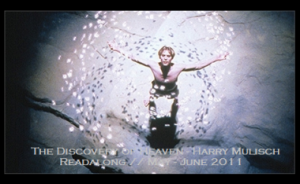
The Discovery of Heaven Readalong - Part 3


  Part Three of The Discovery of Heaven is primarily focused on Quinten, the son of Ada and Onno (or Max?).  After his birth, Max and Sophia - Ada's mother - take Quinten to live in a castle that has been converted into a condominum-like setting; as Quinten gets older he is a regular presence in the homes of the other residents and learns enough that he becomes wise beyond his years. 

  Onno still plays a role in Quinten's life but it is fairly hands-off; he supports his upbringing financially and occasionally visits him, but with his ascendant career in Dutch politics it is apparent that he made the right decision in letting others raise his son.  Quinten doesn't seem affected by this distance; in fact if anything he seems that much more in awe of Onno.

  Quinten knows he has a mother and that she is not able to be with him, and when he is young he creates some touching make-believe scenarios to explain her absence.  When he is older and goes to visit Ada for the first time, I was touched by his maturity and how Mulisch described the scene.

  Two important deaths cause huge upheavals in the lives of everyone.  After the first death, Onno goes off the grid and refuses to be contacted by anyone, not even Quinten, and probably has not (yet) been made aware of the second -- more shocking and surprising -- death.  This second death has caused Quinten to question everything, like Onno has; and he becomes bound and determined to find him.   

  The final part of the book is going to be interesting and I cannot wait to see how Mulisch brings it all together.  I'm especially looking forward to finding out the significance of Onno and Max's initial meeting.

Friday, June 10, 2011

A Game of Character by Craig Robinson


 by Craig Robinson
Published:  2011 by Gotham Books (paperback edition)
Source:  Received for review as part of TLC Blog Tour

    Craig Robinson is Barack Obama's brother-in-law, the older brother of Michelle Obama.  In the world of publishing today, when just about anyone can get a book deal (Snooki, anyone?), this family tie likely did not hurt his chances, but it is a shame that some people might judge him and his book on that point alone, because Mr. Robinson has put together a pretty successful and inspirational life of his own.

    It's not a "rags to riches" story; the Robinson family was working class and made do with what they had, and even when Craig achieved his dream of coaching college basketball I don't think he would consider himself wealthy.   But when at the age of nine a classmate commented that he wanted to have a family like the Robinsons because they were "rich":

At nine years old, I didn't know what rich was.  But I did suspect what he meant was that my sister and I had both a dad and a mom, and that my parents really cared.  And if that was being rich, then there was no question that's what we were.

  The fact that the Robinsons were a rare entity in their neighborhood - a strong, cohesive family -- not only makes the achievements of their children understandable, but you still have to respect and admire Fraser and Marian Robinson for their parenting abilities.

  When Craig starts playing basketball, first in neighborhood pickup games and then at the high school and college levels, he takes the lessons he learned from his parents and builds on those provided by his coaches.  The details of basketball strategy are a bit too heavy for my taste, but he as he is so passionate about the game he seems to be able to use them to explain anything. 

  The historic Presidential election of 2008 is covered in the book, but only as another anecdote in the life of the Robinson family.  Barack Obama just happens to be his little sister's husband who happened to achieve a very important position.  Of course Craig's political views are implied, but not overtly so, and there is no political message to be taken from the book.

  This is a very positive book and since I generally avoid these types of stories (I'm a bit of a cynic) I was pleasantly surprised to have enjoyed reading it.  It is at times a bit too cheery (the editor should have limited the use of exclamation marks) but it is a book that anyone can read and can learn from.

Recommended

Make sure to check out the other stops on A Game of Character's blog tour here

Wednesday, June 8, 2011

The Aquarium by Aleksandar Hemon

  In addition to being a bookaholic, I am also a magazine-aholic and have several subscriptions that pile up alongside the bookshelf.  One of my subscriptions (on my nook -- less clutter!) is to The New Yorker, and the current issue is "The Fiction Issue" with essays and short fiction by a wide range of authors.

  If the first piece - "The Aquarium" by Aleksandar Hemon - is any indication, this is going to be one amazing issue.  (Sadly, it is behind the website's paywall so I can only provide a link to the abstract)

  My only familiarity with Hemon to now has been his work as editor of the Best European Fiction anthologies (I have The Lazarus Project patiently waiting on the shelf, which now may be moved to the front of the pile).  Last November, as part of the Chicago Humanities Festival, he was to moderate a selection of readings from the anthology and I attended; however at the beginning of the program another gentleman came to the podium to say that Hemon was not able to be there because his daughter passed away. 

  This essay is about his daughter Isabel -- only nine months old when diagnosed with a rare brain tumor -- and the progress of her illness and how it affects not only her parents but her 3 year old sister Ella.  I am not a parent so I cannot imagine the experience of seeing one child go through so much pain and suffering while trying to keep a brave face for your other child.  Ella seems wise beyond her years, keeping Isabel smiling when she is able to visit her in the hospital, while at home creating an imaginary brother;  all the while appearing to understand that things are wrong. 

  This is a heartbreaking story (Isabel only recently passed her 1st birthday when she died) but so well-written, and if you're a marshmallow like me (and, frankly, even if you're not) make sure to have a tissue or two handy if you have the opportunity to read it. 

Highly recommended.

Sunday, June 5, 2011

5 Best Books .... That Take Place During a War


  The 5 Best Books meme is hosted by Cassandra at Indie Reader Houston.

  This week's 5 Best is the 5 best books that take place during a war.  I am bizarrely fascinated with anything set in World War II so this one is an easy one for me, though I am focusing only on novels:

  1. Hitler's Canary by Sandi Toksvig.  A wonderful story about how the war affected the citizens of Denmark  (link is to my review)
  2. The Boy in the Striped Pajamas by John Boyne.  I mention this in almost every "best of" list I've made.  Just read it. 
  3. City of Thieves by David Benioff.  If one could describe a WWII novel as "comic", this one would be it, but still the horrors of the war in the Soviet Union are not ignored.
  4. Hotel on the Corner of Bitter and Sweet by Jamie Ford.  The war is not a direct part of the plot in this novel, but its effects on Japanese-American citizens (and other Asian-Americans) is prevalent.
  5. A Thousand Splendid Suns by Khaled Hosseini.  This is not set in WWII, but partially in the Soviet/Afghan war of the 1980s.  A wonderful wonderful novel.
  What do you think are the best books that take place during a war?

Friday, June 3, 2011

A Kind of Intimacy by Jenn Ashworth


A Kind of Intimacy by Jenn Ashworth
Published:  2010 by Europa Editions
Source:  Purchased

   I admit -- I picked up this book because of its publisher.  I have enjoyed everything I've read from Europa Editions so when I am browsing a bookstore with an itch to purchase if I see one of their distinctive covers on the shelf I will pick it up.
 
  And with this book I was most definitely not disappointed!  A Kind of Intimacy is a thrilling novel that gave me the creeps at times but never made me want to stop reading.

  The novel is about Annie, an overweight woman moving to a new home to make a new start.  It is not immediately clear why she needs that new start, but it seems that she may be running away from something.  But she settles in and appears to be working toward that new start by reading all of the self-help books stocked at the public library and making an effort to get to know her neighbors; especially Neil, the man who lives next door with his girlfriend Lucy and who Annie believes she has met before.
 
  I think because of her weight problem and the fact that some of the neighbors (ok, Lucy) are indirectly rude to her because of it, I initially felt extremely sorry for Annie and understood her infatuation with Neil (haven't we all done that?)  And as she made the efforts to improve herself -- emotionally if not physically -- I wanted to cheer for her.  But as she describes her progress in self-improvement, she also provides anecdotes to the life she left behind -- about her emotionally distant father, her deceased mother, her childhood friend Boris and his family, and her husband Will -- the picture of Annie completely changes and with each revelation of her past the scenes get darker and you start to wonder how -- not if -- Annie's illusory world is going to crack and who is going to be affected.
 
  I mentioned that the book gave me the creeps at times, and I think part of the reason is because I saw something of myself in Annie.  I'm not the most outgoing person in the world and sometimes feel awkward in social situations, so I have been known to "attach" myself to anyone who pays me any positive attention.  And that could also be why I initially felt sorry for Annie.  Thankfully, though, that is the only characteristic her and I have in common.

  If you like literary fiction, you will love this book.  If you like page-turning thrillers, you will love this book.  In fact, I think anyone will love this book, so just do yourself a favor and pick it up.

Highly recommended.

Thursday, June 2, 2011

Jerusalem Maiden by Talia Carner


Jerusalem Maiden by Talia Carner
Published:  2011 by Harper
Source:  ARC received from publisher for review

  Esther Kaminsky is an ultra-Orthodox Jewish girl in Jerusalem of the early 20th century, and as a result her role in life is simple:  to marry and have many children (preferably sons).  However, when her teacher notices Esther's talent for drawing and encourages her artistic talent, she begins a lifelong struggle with her obligations to family and faith and her desire for self-expression. 

  Esther definitely has rebellious tendencies, and merely by studying with her French teacher, Mademoiselle Thibaux, she would be causing shame to her family if they knew about it.  But her family is still central to her life, and when crises and tragedy strikes, her art is put aside; but it is always with her:

"You may have forbidden yourself to hold a pencil or a brush," Mlle Thibaux said, "but you can't change the way your eyes distinguish hues where everyone else sees merely bland colors.  You can't change the fact that you watch the world from a perspective unavailable to others.  You can't change the nature of the dreams that come to you at night."

  After an arranged marriage and the birth of her children, Esther seems settled and content with the life chosen for her.  But when she sails to Paris -- to meet up with her husband who has been in Europe on business -- the inner conflicts of her youth resurface. 

  Of course being the francophile that I am I loved the part of the book set in Paris the best; but it wasn't only the setting that I loved reading.  It's probably a cliche but when she was in Paris, Esther - sheltered from the outside world essentially her whole life - was allowed to completely be herself, without any obligations to anyone but herself.  Yes, she had doubts about whether her choices were right or proper, but she did them anyway and let the consequences fall where they may, and for that I have to admire her ability to develop such courage. 

  I did find the first part of the book a little dry, though I understand its necessity to the novel as a whole, and I probably needed a longer timeline to appreciate the novel's epilogue; but otherwise I found Jerusalem Maiden  to be enjoyable and an insightful look into Orthodox Jewish life in the early 1900s.

Recommended.

Wednesday, June 1, 2011

June Reading List

Bookish things of note for June:

  • I will be attending The Printers' Row Lit Fest in downtown Chicago on Saturday June 4. The schedule arrived this week and I've already circled a few panels I'm looking forward to (and put aside a few $ for some new books!)
  • I will once again be participating in the Literary Giveaway Blog Hop,  hosted by Judith at leeswammes that will run from June 25-29. I still haven't figured out what I will be offering, but be sure to stay tuned!
In the meantime, here is what I have on the reading agenda for the month:

For Reading Groups:
For Reading Challenges:
For Review:
What are your June reading plans?